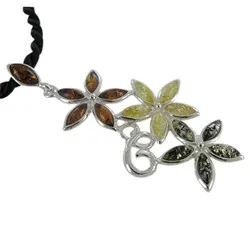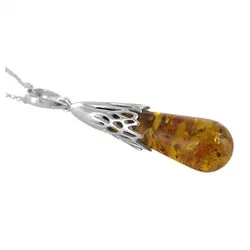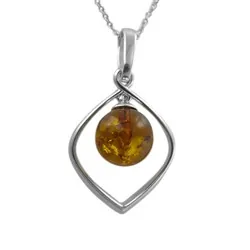
Polish Baltic amber jewelry has an immediate pull. The amber feels warm, the silver gives it a bright edge, and even a simple pendant can look unlike anything beside it. That individuality is part of the reason people seek it out. The useful question is not whether every piece should look the same. It is how to choose a piece whose material, craftsmanship and character are clearly described.
Poland is closely linked with Baltic amber craft, especially around Gdańsk and the coast. Yet a place name alone is not a guarantee of quality, origin or value. A worthwhile purchase begins with the actual item in front of you: its color, the work around the stone, the clarity of the description and the seller’s willingness to answer sensible questions.
This guide is for the shopper who wants the romance of Polish amber jewelry without the guesswork. It explains the qualities that matter, the language worth asking about and the small decisions that turn an appealing photograph into a piece you will be happy to wear. The best outcome is simple: a beautiful object you understand well enough to enjoy.
Why Polish amber jewelry feels distinctive
Baltic amber has moved through the region’s trade routes and workshops for centuries. In Poland, that long familiarity has grown into a lively jewelry tradition, where makers pair warm resin with cool sterling silver in forms ranging from quiet studs to sculptural pendants. The result can feel traditional, modern or a little bit playful, often within the same collection.
The material itself makes repetition difficult. Amber can be lemon, honey, cognac, cherry, greenish or softly milky. It can be transparent, clouded with tiny bubbles or marked by internal traces that resemble a miniature landscape. Two stones cut to the same shape may catch light differently. That is not a flaw in the collection. It is the point of choosing a natural material with a long story.
The surrounding metal changes the mood. A smooth silver bezel can make a glowing cabochon feel crisp and contemporary. Textured or antiqued silver can give the same color a more folkloric or dramatic presence. Look at the setting from the side as well as the front. Notice whether the stone seems protected, whether the proportions feel balanced and whether the jewelry looks comfortable for the way you actually dress.
Our Polish amber jewelry collection is selected around that kind of individual character, rather than a single uniform look. It is a useful place to compare color, scale and silverwork before deciding what feels most like you.

Start with the words used to describe the amber
A clear listing tells you what the seller knows, and what they are prepared to stand behind. Look for plain language about the material, the metal, dimensions and condition. If a piece is described as Baltic amber, ask whether it is natural amber, pressed amber or a treated variety. Those terms are not automatically good or bad. They describe different material histories, and shoppers deserve to know which one they are considering.
Natural amber is shaped from a single piece of fossil resin. Pressed amber is made by fusing smaller amber pieces under heat and pressure. It is still amber when no other material has been added, but it does not have the same single-piece structure. Copal is younger resin, not amber, and plastics or glass can imitate the look from a distance. The International Amber Association’s consumer guidance on buying amber advises buyers to ask about treatment and natural color, keep proof of purchase and choose established sellers.
Treatment also deserves a calm, direct conversation. Heating, clarification and color backing can be used to change the appearance of amber, and the International Amber Association’s terminology recognizes that modifications exist. Disclosure is what matters. A seller who explains treatment has given you useful information. A seller who cannot say what a term means has left you with less confidence than you need.
Avoid turning home experiments into a purchase test. Hot needles, strong solvents, burning and abrasive rubbing can permanently damage jewelry, and simple tests can be misleading with a finished piece. If the claim matters enough to affect the price, a seller’s documentation or an independent expert assessment is more valuable than a risky experiment at the kitchen table. Our guide to telling if amber is real explains safer ways to think through that decision.
Read the photographs like a jeweler would
With amber, photographs are not decoration. They are part of the description. Start by asking whether you are seeing the exact piece or a representative sample. A one-of-a-kind cabochon can vary dramatically in tone and internal detail, so the precise stone matters. Multiple views help you understand the surface, the color in different light and the way the silver holds the amber.
Look for a full front view, an angled view and a sense of scale. A ruler, dimensions or a photograph on a hand makes a difference when you are deciding between a delicate everyday pendant and a more visible statement piece. For earrings, check the drop length and closure. For a ring, check the stated size, the height of the setting and how much of the stone projects above the finger.
Do not expect natural amber to behave like a perfectly uniform manufactured stone. A tiny cloud, bubble or internal line may be the feature that gives it life. What you should expect is an honest image: no heavy color shift, no image that hides a crack or loose edge, and no vague description that leaves you guessing whether visible variation is natural or damage.
If a piece is vintage, be even more deliberate. Wear at the prongs, a small chip, an old repair or a softened surface may be part of the item’s history, but it should be named clearly. Our Vintage amber collection is a useful reminder that age and condition are not the same thing. The right piece is one whose story and current state both feel right for you.

Choose for the life the jewelry will have
A good jewelry choice begins with your real routine, not a fantasy version of it. If you wear the same small earrings most days, a pair of studs or a short, lightweight drop may be the piece that earns its place. If you prefer one expressive detail over several accessories, a pendant can carry more personality without asking much from the rest of an outfit.
Color is a practical choice as well as an emotional one. Honey amber is a familiar warm neutral. Cognac can feel richer against black, navy and winter fabrics. Lemon amber brings a brighter lift, while cherry or green-tinted pieces can make a stronger statement. There is no universally best shade. Choose the one you keep returning to when you look at the photograph, because that instinct is usually more useful than a rule.
Silverwork deserves the same attention. Sterling silver offers contrast to amber’s warmth, but its finish can change the whole effect. Polished silver reads clean and bright. Oxidized details can sharpen a botanical or historical design. A larger frame can make a small stone more visible, while a minimal mount lets the amber do all the talking. Compare pieces in the pendant, earring, ring and bracelet collections to see how those decisions change the feeling of a stone.
When buying a gift, focus on the recipient’s habits. A petite pendant or classic studs can be easy to wear immediately. A dramatic ring is more personal, but only if you know the size and style will suit them. A clear return policy gives a gift room to become the right choice, rather than a worry that must be solved quickly.
Ask the questions that create confidence
A thoughtful seller should welcome straightforward questions. You do not need a laboratory vocabulary. Ask whether the listing shows the exact piece, whether the amber has been treated, what metal is used, what the dimensions are and how the item should be cared for. If the piece is described as Polish, ask what that means in the listing: designed there, made there, sourced there or simply inspired by the region. Precise wording makes a difference.
For an especially valuable, collectible or inherited item, professional testing is the sensible route. The International Amber Association’s laboratory evaluates amber jewelry and can issue a certificate or examination report. The Amber Museum in Kraków also describes using infrared spectroscopy to assess amber products. Those services are a better fit for a consequential claim than guesswork from a photograph or a home test.
Price is only one signal, and it is not a verdict. A low price can reflect a small stone, simple silverwork, a sale or a material that needs more explanation. A high price can reflect craftsmanship, rarity, size, an unusual inclusion or a seller’s own positioning. Compare the whole picture: disclosure, photographs, construction, origin claims and the actual piece you will receive.
A good buying experience should feel calm. You should be able to read the description, ask a question, review the return terms and decide without being pushed toward a miracle claim or a rushed purchase. For a broader checklist, see our guide to where to buy amber jewelry. It covers the seller-side details that help a beautiful choice stay a confident one.

Care for the piece you chose
Amber is an organic gem material, so a gentle routine is part of owning it well. Put it on after perfume, hair products and lotion have settled. Take it off before swimming, showering, cleaning or tasks where it might strike a hard surface. A soft dry cloth after wearing is usually enough for routine care.
Store amber separately from harder jewelry. A soft pouch, lined box or divided compartment helps prevent scratches from metal, gemstones and loose clasps. Do not place silver polish directly on the amber. If the setting needs attention and you cannot confidently keep a product off the stone, an amber-aware jeweler is the safer option.
Care is not about keeping a piece frozen in time. It is about protecting the qualities that made you choose it: the glow, surface, silverwork and particular character. Our Amber Care guide keeps the practical basics in one place, while How to Polish Amber Safely at Home explains when a light touch is enough and when professional help makes more sense.
Polish Baltic amber jewelry is at its best when its real qualities are allowed to lead. Look for a material description you understand, photographs that show the actual piece, craft details you enjoy and a seller who answers plainly. Then choose the piece that feels easy to imagine wearing. That is the kind of confidence that lasts well beyond the first look.
- Read the material and treatment description before buying.
- Check that photographs show the actual piece and provide a sense of scale.
- Choose color, setting and size for your own wardrobe and routine.
- Ask direct questions about origin, metal, care and returns.
- Protect amber from chemicals, heat and hard knocks after it comes home.
Frequently asked questions
What makes Polish Baltic amber jewelry special?
Polish amber jewelry is valued for the region’s long craft tradition and for the individual color and character of Baltic amber. The specific stone, silverwork and clarity of the seller’s description matter more than a place name alone.
Is all Polish amber jewelry made from natural single-piece amber?
No. Jewelry may use natural amber, pressed amber or treated varieties, and those terms should be disclosed. Ask the seller what material is used and whether the color or clarity has been modified.
How can I tell whether an amber listing is trustworthy?
Look for clear material and metal descriptions, detailed photographs of the actual piece, dimensions, care guidance, straightforward treatment disclosure and a sensible return policy. Avoid sellers who rely on vague claims or encourage damaging home tests.
Does Polish-made mean the amber was found in Poland?
Not necessarily. A piece may be made in Poland while its amber has a different regional source. Ask whether the claim refers to the maker, the workshop, the material source or the design when that distinction matters to you.
How should I care for Polish Baltic amber jewelry?
Keep it away from perfume, solvents, heat, swimming and hard knocks. Wipe it with a soft dry cloth after wearing and store it separately from harder jewelry. Seek professional help for cracks, loose stones or significant repairs.