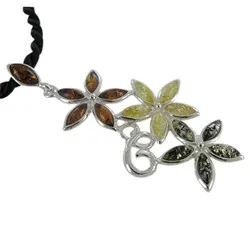
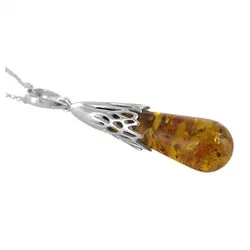
Where to buy amber jewelry is a more useful question than it first sounds. A lovely color in a tiny photograph can catch your attention, but the right purchase is about more than a quick first impression. You want to know what the material is, what has been done to it, whether the listing shows the actual piece, and what support is available if it is not right when it arrives.
Amber rewards a little patience. It is naturally varied, often lightweight, and full of details that do not reveal themselves at a glance. A stone can look clear from one angle and softly clouded from another. A silver setting can feel delicate or bold. The best place to buy amber jewelry is a place that gives you enough information to choose the individual piece, not merely the idea of amber.
This guide gives you a practical way to compare sellers, online listings and in-person finds. It is designed for a shopper choosing jewelry to wear or give, not for someone trying to turn every purchase into a laboratory exercise. The goal is simple: buy a piece you understand, love and can enjoy with confidence.
Start with a clear material description
A trustworthy seller should be able to describe the material in plain language. Look for a distinction between natural amber, pressed or reconstructed amber, copal, glass and manufactured resin. These are not interchangeable names. A listing that only says ‘amber color’ or avoids the material altogether leaves too much to guesswork.
Natural amber is fossilized tree resin. The Gemological Institute of America’s amber buyer’s guide notes that amber appears in a wide range of colors and may be transparent or cloudy. That natural variation is part of its charm, not a defect a seller needs to hide. Interesting internal character, a warm glow or a gentle shift of color can all be reasons to love one stone over another.
Treatments and construction deserve the same honesty. Heat can clarify some amber, and pressing small pieces together can create a larger composite material. Neither fact automatically makes a piece undesirable. What matters is that the description matches the piece and its price. You are free to prefer an untreated, naturally varied stone, a heat-enhanced piece with extra sparkle, or a more accessible reconstructed piece. You should simply know which one you are considering.
If a description uses a term you do not recognize, ask. A good answer should make the item easier to understand, not make you feel as if you are asking the wrong question. For a deeper foundation, read our guide to what Baltic amber is.

Look for the actual piece, not a generic promise
For a one-of-a-kind material, photographs do real work. The listing should show the amber from more than one angle, ideally in clear light, and should make the scale understandable. Close images reveal color, internal clouds, surface texture and the relationship between the stone and its setting. A useful product description adds dimensions, metal information and any condition notes alongside those photographs.
Do not expect every amber piece to be perfectly uniform. A bead strand may include small variations from bead to bead. A cabochon can have a darker edge, a soft inclusion or a change in clarity that makes it more interesting in person. What you should expect is that the imagery and words prepare you for those details instead of concealing them behind filters, glare or vague language.
Ask yourself one practical question: does the page make it clear what will arrive? If the answer is no, slow down. A retailer who photographs the exact pendant, ring or earrings gives you a much fairer basis for deciding. That matters especially for gifts and for pieces you hope to wear often, because the specific color and proportion are part of what make a piece feel like yours.
The same approach makes comparing styles easier. A pendant gives the amber a central role. Earrings bring color close to the face. Rings and bracelets let you notice the stone throughout the day. Browse the site’s pendants, earrings, rings and bracelets with that real-life use in mind.

Ask the questions that a good seller expects
You do not need expert vocabulary to shop well. A few direct questions are enough: What is the material? Is the pictured item the exact one I will receive? Has the amber been treated? What metal is used? What are the dimensions? Is there any damage or repair? What happens if it is not right when it arrives?
The Amber Portal’s consumer guidance likewise advises buyers to ask whether amber has been treated and whether its color is natural. That is sensible advice because amber’s appeal is often visual. The answer does not have to be a dramatic sales story. Clear, calm details are more useful than a long promise about rarity or value.
Notice how the answer is given. A seller who knows the item should be able to explain what they know, say plainly what they do not know and point you toward the product information. Pressure, evasiveness or a refusal to discuss a return path are reasons to leave the purchase for another day. There will always be another beautiful piece of amber.
For an expensive, antique or inclusion-rich specimen, an independent laboratory report can add useful reassurance. The GIA notes that a report can confirm that amber is natural and that an inclusion has not been added later. That level of documentation is not necessary for every everyday pair of earrings, but it can be appropriate when the claim or price is significant.
- What is the material, stated plainly?
- Is this the exact piece I will receive?
- Has the amber been treated or reconstructed?
- What are the dimensions and metal details?
- What return or exchange path is available?

Use price as context, not proof
Price can help you compare pieces, but it cannot authenticate a piece by itself. A large, clear amber cabochon, fine metalwork, an unusual inclusion, careful hand finishing or a vintage setting can all influence the price. So can the retailer’s service, photography, return policy and the fact that a one-of-a-kind item takes more work to describe and present well.
At the other extreme, a bargain does not become a good value simply because it is inexpensive. If a listing makes a strong promise but gives no material details, no close images and no clear support after purchase, a low price may only mean that the risk has been shifted to you. Buy within a budget you feel good about, but compare the information around the piece as carefully as the number beside it.
Shipping and presentation can be part of that comparison too. A fragile material deserves a box or pouch that keeps it from rubbing against hard metal during transit. When you are giving amber as a gift, it is reasonable to ask whether the piece will arrive ready to present and whether the recipient can exchange it if the fit or style is not right. Those details do not make the jewelry more authentic, but they do make the purchase more thoughtful and easier to enjoy.
For vintage pieces, condition can matter as much as color. Look for notes about chips, cracks, repairs, replacement clasps, worn silver or restringing. Vintage amber often has a softer finish and a history that a new piece cannot duplicate. The right description lets you decide whether those signs of age are part of the appeal or a reason to choose something else. A seller who names condition clearly is helping you buy on your own terms.
Avoid getting pulled into claims that a particular shade is automatically best. Honey, cognac, lemon, cherry and milky amber can all be compelling. Clarity is a matter of preference unless a seller is making a specific collector claim. Inclusions can add character, but an inclusion alone does not guarantee value. The right piece is the one whose material, scale and design suit the way you will actually wear it.
If authenticity is your main concern, do not damage a prospective purchase with a hot needle, solvents or a scratch test. Those shortcuts can harm genuine amber and still fail to give a reliable answer. Our How to Tell If Amber Is Real guide explains safer ways to evaluate a listing and when professional identification is worthwhile.
Choose a seller whose point of view matches yours
The best place to buy amber jewelry is not always the biggest marketplace or the flashiest storefront. It is the seller whose approach helps you make a clear choice. Some shoppers want a refined, everyday silver-and-amber piece. Some are looking for a vintage find. Others want a small gift with a particular color. A specialist with a real point of view can make that search more enjoyable because the collection has been chosen rather than merely assembled.
Andzia’s Amber Jewelry has focused on amber since 1996, selecting pieces from artisan workshops and small shops for their color, setting and individual character. That curatorial eye matters with amber because no two stones are exactly alike. A piece does not need to be the largest or the rarest to deserve attention. It needs to be described honestly and to feel right when you see it.
Start with the style you reach for most often, then let the stone guide you. A small pair of studs can become a daily signature. A pendant can carry more presence without feeling heavy. A ring makes the color visible every time you use your hands. The Baltic amber jewelry collection is a good place to compare those directions at your own pace.
When the piece arrives, inspect it gently in daylight before wearing it. Confirm that the color, shape, setting and scale match what you expected. Keep the receipt and care information. Then enjoy it for what it is: a small piece of natural history, shaped into jewelry with a personality of its own.
A simple buyer’s checklist
A confident amber purchase is usually a calm one. You do not need to solve every question about the material in one sitting. You only need enough honest information to decide whether this exact piece is right for you. If the listing is clear, the photographs are useful and the seller is straightforward about material and support, you can spend your attention on the enjoyable part: choosing the color, shape and setting that stays with you.
Once you have chosen a piece, protect it with simple care. Amber is softer than many gemstones and deserves a gentle routine. Put it on after perfume and hair products, remove it before swimming or cleaning, and store it away from harder jewelry. Our Amber Care guide has the everyday essentials, while our guide to polishing amber safely helps when a favorite piece needs a careful refresh.
- Read the exact material description before falling for the photograph.
- Look for photographs of the actual piece from more than one angle.
- Ask about treatment, dimensions, metal and condition.
- Choose a seller with a clear return path and straightforward answers.
- Buy the piece you love for its visible character, not a promise you cannot verify.
Frequently asked questions
Where is the best place to buy amber jewelry?
The best place is a seller that clearly identifies the material, shows the actual piece in useful photographs, explains any treatment or condition details, and offers a reasonable way to ask questions or return the item if it is not right.
What should I ask before buying amber jewelry online?
Ask what the material is, whether the pictured item is the exact one you will receive, whether it has been treated, what the dimensions and metal details are, and what happens if the piece is not right when it arrives.
Does treated amber mean fake amber?
No. Treatment and authenticity are different questions. Heat treatment or reconstruction should be described plainly, so you can choose knowingly. A transparent description is more important than a dramatic claim about rarity.
Do I need a certificate for amber jewelry?
Most everyday jewelry does not require a laboratory report. For a costly, antique or unusual piece, an independent report can provide useful confirmation of natural amber or a notable inclusion.
How can I care for amber after I buy it?
Keep amber away from heat, chemicals, perfume and hard knocks. Wipe it gently with a soft cloth after wearing, store it separately from harder jewelry and seek professional help for cracks, deep scratches or fragile vintage construction.