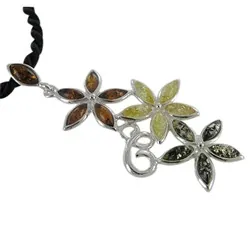
When amber loses some of its glow, it is tempting to reach for whatever makes silver, glass or a hard gemstone shine. That is exactly the moment to slow down. Amber is fossilized resin, so it responds best to a soft cloth, a calm hand and a little patience. Most everyday dullness is surface film from skin, lotion or ordinary wear, not a problem that needs aggressive polishing.
This guide is for finished amber jewelry that looks a little tired but is otherwise sound. It is not a repair manual for cracked stones, loose settings, broken strings or deeply scratched vintage pieces. With amber, the safest choice is often the most modest one: clean gently, assess in good light, and stop before a simple refresh turns into an irreversible alteration.
The short version: wipe first, use only a small amount of lukewarm water when needed, dry completely, and keep abrasives, steam, solvents and heat away from the stone. If that does not restore the look you hoped for, a jeweler who understands amber can tell you whether professional refinishing is sensible.
Why amber needs a different approach
Amber is an organic gem material, not a hard crystal. The Gemological Institute of America describes amber as fossilized tree resin, which is why a warm, lightweight cabochon should not be cleaned as though it were a diamond. Its surface can scratch more easily, and its finish can be affected by heat, strong cleaners and overly enthusiastic buffing.
That softness is not a flaw. It is part of amber’s appeal. A piece may have tiny clouds, natural texture, a gentle change in color or visible inclusions that give it a life of its own. Polishing should never mean trying to erase that character. The goal is simply to remove ordinary surface residue and let the natural material look like itself again.
It also helps to separate the amber from the setting in your mind. Sterling silver may tarnish while the stone is perfectly fine. A silver polishing cloth, metal dip or paste can be useful for silver in the right hands, but it should not touch the amber. If you cannot work around the stone confidently, ask a jeweler to clean the piece rather than risking both materials at once.

Start with the safest refresh
Lay the piece on a clean, soft towel in good natural light. Use a dry microfiber or soft flannel cloth to wipe the amber with light, even strokes. This alone often lifts fingerprints, dust and the faint film that can make a clear stone look cloudy. Turn the jewelry slowly, checking both the front and the edges. Do not press hard around a bezel, bead hole, clasp or delicate silver detail.
If a dry wipe is not enough, lightly dampen one corner of the cloth with lukewarm water. The cloth should be barely moist, never dripping. Wipe the amber, then immediately use a dry section of the cloth to remove all moisture. Avoid soaking a necklace, bracelet or pendant, because water can linger around stringing, glue, metalwork or older construction you cannot see.
Look again before doing anything more. A fresh, even surface is success. Do not keep rubbing just because you planned to polish. In fact, a gentle cleaning routine after occasional wear is much kinder to amber than a major rescue once a year.
- Use a clean microfiber or soft flannel cloth.
- Work on a padded surface in bright, indirect light.
- Use lukewarm water only when a dry cloth is not enough.
- Dry the stone immediately and completely.
- Stop as soon as the surface looks clean and even.

What not to use on amber
Skip ultrasonic cleaners, steam cleaners, hot water, jewelry dips, harsh detergents, alcohol, acetone and household solvents. Heat and sudden temperature changes can be especially unkind to amber. Tiffany’s gemstone-care guidance specifically advises avoiding temperature shocks, abrasives, cosmetics, hairspray, perfume and household chemicals around amber.
Toothpaste, baking soda, rough cloths, kitchen sponges and generic polishing compounds are also poor choices. They may seem mild on a countertop, but they can leave fine scratches or a hazy surface on amber. A spinning tool can build heat quickly, and sanding is not a sensible experiment on a finished piece with sentimental or financial value.
It is worth being cautious with internet shortcuts that promise an instant shine. An oil or polish can temporarily change the look of a surface without solving the reason it looked dull. If a piece is persistently cloudy, sticky, deeply scratched or changing color, stop home treatment and ask for professional advice. A short pause is far cheaper than a permanent mark.
The same rule applies to testing a piece’s authenticity. Do not heat, scratch or apply chemicals to see whether it is real. Our guide to telling if amber is real explains why those dramatic tests can harm the jewelry without giving a dependable answer.
When a little dullness is normal
Amber does not need to look like factory-finished glass to be beautiful. A natural stone can appear more matte at the edges, more transparent in the center, or softer in color after years of wear. Those changes are not always dirt or damage. They can simply be the material responding to light, skin contact and the life it has shared with you.
Before trying to change the finish, compare the piece in shade and in daylight. A stone that looks muted under a warm lamp may glow near a window. Check whether the apparent dullness is actually on the surface or inside the stone. Internal clouding, bubbles and inclusions are part of the amber, so no amount of wiping should be expected to remove them.
This distinction matters when you shop too. Clear photographs and plain material descriptions give you a better sense of an individual stone than heavily filtered product images. The Baltic amber guide explains why variation in color and clarity is one of the material’s most compelling qualities.
A sensible routine for rings, necklaces and beads
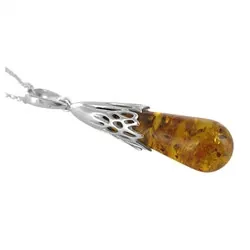
Different pieces collect wear in different places. Rings and bracelets meet tabletops, door handles, dishes and sleeves all day, so they may need a quick dry wipe more often. Necklaces and pendants tend to pick up perfume, hair product and skin oils around the back of the neck. Beaded pieces deserve special care because moisture can settle around the thread, knotting or clasp even when the amber itself looks fine.
For a ring or bracelet, wipe the stone after a day of wear and look closely at the edge where amber meets metal. For a pendant, hold the chain away from the stone while you wipe so the clasp or links do not rub against the surface. For a bead necklace, support the strand rather than letting it hang from one end, and do not pull it through a wet cloth. If it needs more than a gentle wipe, lay it flat and work one small area at a time.
Avoid making a schedule that forces you to clean a piece that is already clean. Good care is responsive, not ceremonial. A treasured necklace worn once for dinner may only need a quick cloth. A bracelet worn several times a week may benefit from more regular attention. The objective is to remove residue before it builds up, while touching the stone as little as possible.
Before you begin, take a quick photograph of a piece that matters to you. It gives you a useful before-and-after reference, especially if the change is subtle. It also helps you notice details such as a loose prong, an old repair or a developing crack that might otherwise be missed. If the surface does not look better after the first gentle clean, do not escalate to stronger methods. That is the moment to preserve what you have and get an experienced opinion.
If your jewelry combines amber with other materials, follow the most delicate material’s rules. Pearls, coral, turquoise, old enamel, glued details and vintage stringing may need even gentler treatment. When you are unsure, separate the question into two parts: what is safe for the amber, and what is safe for the whole piece? That pause is usually the difference between careful maintenance and an accidental repair project.
Know when to call a professional
A professional is the right next step when amber is cracked, chipped, loose in its setting, visibly scratched, sticky, or attached to a fragile vintage construction. It is also the safer route for a family heirloom, an antique piece or anything you would be upset to alter. A jeweler who works with amber can inspect the whole item, not just the visible face of the stone.
Ask directly whether the jeweler has experience with amber or other organic gem materials. Explain what has changed, how long you have owned the piece and what you have already tried. A useful professional answer may be that gentle cleaning is all the piece needs. That is good news, not a missed opportunity for a more dramatic treatment.
For pieces with uncertain material or unusual inclusions, preserve the surface and get an informed assessment before attempting restoration. Amber and copal can look alike, but they behave differently over time. The amber versus copal guide offers a calm starting point for understanding those names without putting jewelry through a home test.
Keep the glow longer between cleanings
The best polish is prevention. Put amber on after perfume, hair spray, lotion and makeup have settled. Take it off before swimming, showering, exercising, household cleaning or any work where it can be knocked against a hard surface. A necklace is usually protected by its position, while rings and bracelets collect more contact during an ordinary day.
Store amber separately from harder jewelry in a soft pouch, fabric-lined box or divided compartment. Letting it rub against metal, gemstones or loose clasps in a shared box is an easy way to create the fine surface marks that later look like dullness. Wipe it with a clean dry cloth before storing it, especially after warm weather or a long day of wear.
Andzia’s pieces are chosen for the individual color, inclusions and craftsmanship that make Baltic amber special. Browse the amber collection, or explore pendants, earrings and bracelets when you are ready to choose a piece with a character all its own. For everyday habits, the site’s Amber Care page keeps the essentials in one place.
- Put amber on after fragrance and hair products.
- Wipe it with a dry soft cloth after wearing.
- Store it separately from harder jewelry.
- Remove it before swimming, showering and cleaning.
- Choose professional help for cracks, deep scratches and sentimental pieces.
Frequently asked questions
Can I use toothpaste to polish amber?
No. Toothpaste is abrasive and can leave fine scratches or a cloudy finish on amber. A soft dry cloth is the safest first step, followed by a barely damp cloth only when needed.
Can amber jewelry go in an ultrasonic cleaner?
No. Ultrasonic vibration and heat can damage amber, its setting or hidden construction. Clean finished amber jewelry by hand with a soft cloth instead.
Can I use silver polish on an amber setting?
Silver polish should not touch the amber. If the silver around the stone needs attention and you cannot confidently protect the amber, ask a jeweler to clean it.
Why does my amber look cloudy?
A light surface film from ordinary wear can make amber look muted, and a gentle wipe may help. Internal cloudiness, tiny bubbles and inclusions are natural features, so they will not polish away.
When should I have amber professionally polished?
Seek professional advice for deep scratches, cracks, loose settings, sticky surfaces, fragile vintage pieces or jewelry with sentimental value. An amber-aware jeweler can tell you whether refinishing is appropriate.