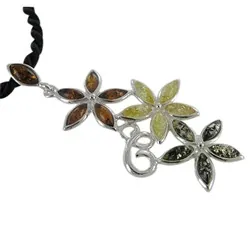
Baltic amber is fossilized tree resin from the Baltic region. It began as sticky resin from ancient trees, then changed over an immense span of time into the warm, lightweight material used in jewelry, scientific collections and archaeological finds. That simple definition is useful, but it leaves out the reason amber feels so personal in the hand: no two pieces record exactly the same journey.
A honey-colored bead, a clear lemon pendant and a deep cherry cabochon can all be amber. So can a stone with cloudy swirls, minute bubbles or a quiet bit of plant material held inside. Those differences are not mistakes to correct. They are part of why amber is chosen for jewelry in the first place.
This guide explains what Baltic amber is, how it developed, why it can look so different from one piece to the next and what that means when you are choosing jewelry. It is a starting point for curiosity, not a substitute for testing a valuable specimen.
Baltic amber is ancient tree resin
Amber is not a mineral crystal like quartz or sapphire. It is an organic gem material formed from tree resin. Fresh resin is sticky and aromatic, but over geological time it can harden and become chemically stable. The Gemological Institute of America describes amber as fossilized tree resin, a definition that helps explain both its soft visual warmth and its need for gentle care.
The phrase Baltic amber refers to amber associated with the Baltic region of northern Europe. You may also see the term succinite used in scientific and trade contexts. It is one of the best-known amber types in the jewelry world, valued for a broad range of colors and for the natural inner details that give a stone depth.
The Baltic name does not mean every piece has an identical origin story or appearance. Amber has been collected, worked and traded across the region for centuries, and the word is used broadly in the jewelry world. What matters to a buyer is that the material is described clearly, the actual piece is shown well and the seller can explain what is known about its construction.
How old is it? Baltic amber is commonly linked with the Eocene, a period roughly 44 to 49 million years ago. A peer-reviewed study of a Baltic amber fossil places that material in this range. It is a useful sense of scale, not a claim that every piece was formed on one exact day or in one identical forest.

How resin became amber
The story starts with a tree. Resin can flow when a tree is injured or protecting itself. In an ancient forest, resin drops and flows could catch on bark, leaves, soil or very small organisms before being buried. Burial matters because it helps protect resin from breaking down at the surface.
Over long periods, pressure, heat and chemical change transform the resin. The process is often described as polymerization, in which the material becomes more stable and solid. The result is not a frozen drop of fresh sap. It is a fossilized material with a long geological history behind it.
That process also explains why amber has a different feel from glass. It is usually lighter for its size, often warmer to the touch and capable of holding soft internal patterns rather than a perfectly uniform surface. Those are useful observations when you are looking at jewelry, although they are not a laboratory identification on their own.
A small piece can carry a surprising amount of context. The Baltic amber facts and figures reference includes examples of what researchers have learned from Baltic amber, from ancient ecosystems to early human trade.
- Fresh resin began as a protective substance from ancient trees.
- Burial helped preserve it instead of leaving it to weather away.
- Time and chemical change turned it into a stable fossilized material.
- Natural conditions produced the differences in color, clarity and inner texture that buyers see today.
Why Baltic amber comes in so many colors
Golden honey is the color most people picture first, but Baltic amber is not limited to one shade. It can appear lemon, cognac, cherry, greenish, milky, red-brown or almost black. Transparency can range from glassy clear to beautifully opaque. A piece may even show more than one tone when you turn it toward the light.
Color depends on the material itself and on how light moves through it. Tiny structures, bubbles and particles can scatter light, making one piece look pale or milky while another appears clear and deep. Surface finish, thickness and the color of a silver setting can also change how the stone reads when worn.
Some amber is enhanced by heat or other accepted treatment to change clarity or emphasize a color effect. That does not automatically make the jewelry an imitation, but it should be described honestly. A good listing tells you whether you are looking at natural amber, pressed amber or a treated piece, so you can appreciate it for what it is.
This is why color is a matter of taste, not a simple quality ladder. A clear cognac stone can feel classic and bright. A milky butterscotch cabochon can feel soft and sculptural. A cherry or green piece can make a bolder statement. The best choice is the one whose character suits the person wearing it.

Inclusions and inner texture are part of amber's appeal
An inclusion is material enclosed within amber as the resin hardened. It may be a tiny bubble, a fine line, a bit of plant material or, more rarely, an insect. When you see a soft cloud, a small fleck or a ribbon-like change in transparency, you are seeing part of that individual history.
Not every piece of amber has visible inclusions, and visible inclusions do not automatically make a stone more valuable. Their importance depends on what they are, how clearly they can be identified and how they affect the finished piece. In jewelry, many people simply enjoy the depth they create, much like a fingerprint that makes one stone unlike the next.
The scientific value can be extraordinary. Baltic amber has preserved evidence of ancient life, including plants and small animals. A 2023 Scientific Reports study identified a Baltic amber bead in northeastern Iberia dated to 3634 to 3363 BC, showing that this material moved across Europe more than 5,300 years ago.
For a wearer, though, the useful point is simpler: variation is not a flaw. A stone with a faint cloud, a brighter edge or a tiny internal mark can be every bit as beautiful as a perfectly clear one. Look closely and choose the kind of character you enjoy seeing.
A word of caution is useful here. A visible inclusion can be fascinating, but it is not a promise of rarity, quality or value by itself. Large claims about unusual insects or ancient finds deserve careful documentation, especially when a price rises sharply because of the inclusion. The same common-sense approach applies to every amber purchase: clear details and a knowledgeable seller matter more than a dramatic story.

What Baltic amber means in jewelry
Jewelry turns this natural variation into something wearable. An artisan studies the shape, color and transparency of a piece of amber, then builds a setting that lets it show. A long clear stone may become a pendant. Small matched pieces may become earrings. A rounded cabochon can be the center of a ring or bracelet.
Because amber is natural, a collection can feel cohesive without every piece looking cloned. Matching earrings may share a hue while showing slightly different clouds or marks. A multi-color necklace can move from honey to cherry in a way no factory paint finish could repeat. Those small differences are often what make a finished piece feel considered rather than generic.
The setting matters because amber is softer than many familiar gemstones. Sterling silver frames and protects it while leaving enough of the stone visible for light to do its work. A well-made setting also gives you practical clues about the care a piece will need over time.
When choosing a piece, start with the format you will wear most. Amber pendants put a single stone front and center. Earrings can add a small wash of color near the face. Bracelets make the material easy to see in motion, while rings keep that color close at hand.
Then let the stone lead. Rather than asking whether a color or inclusion is universally best, ask whether the piece feels balanced, whether the setting is thoughtfully finished and whether you would enjoy seeing that particular stone every day.
How to choose Baltic amber with confidence
A clear material description is the best place to begin. The words Baltic amber, natural amber, pressed amber, copal, resin and imitation material are not interchangeable. They can all describe jewelry, but they describe different things. An honest seller uses the right words and answers straightforward questions about the piece.
Look at photos in natural or even light when possible. Notice the color, the level of transparency and the way the stone sits in its setting. Ask about size, materials and any treatment that matters to you. A return policy is also valuable because amber is visual and tactile. Sometimes the piece that looks right online becomes the one you reach for every day, and sometimes it does not.
Avoid damaging at-home tests. Hot needles, solvents, scratches and improvised flame tests can harm a piece that you value. The recent guide to telling whether amber is real explains the safer clues to use and when a qualified gem professional is the right next step.
- Choose the color and clarity that you genuinely enjoy, not a supposed universal favorite.
- Read the material description and ask about treatment or construction when it matters.
- Inspect the setting, clasp or chain as carefully as the amber itself.
- Keep the receipt and product details for pieces you may later insure or pass along.
- Protect amber from perfume, solvents, hard knocks and prolonged soaking.
A material with history, chosen for everyday wear
Baltic amber has crossed an astonishing distance from ancient resin to a finished piece of jewelry. Its value is not only in its age. It is also in the way each stone catches light, carries a different color and makes a familiar form feel personal.
At Andzia's Amber Jewelry, the collection is chosen from small artisan workshops across the Baltic region, with attention to individual color, character and sterling silver craft. Browse Baltic amber jewelry when you want to see the range in one place, or visit the full collection to find the piece that speaks to you.
Once you have found one, care is simple and gentle. Wipe it after wearing, apply fragrance before you put it on and store it away from harder jewelry. The Amber Care guide covers the practical details.
Frequently asked questions
What is the difference between amber and Baltic amber?
Amber is fossilized tree resin. Baltic amber is a commonly used name for amber associated with the Baltic region of northern Europe. It is well known in jewelry for its color range, natural variation and long scientific and cultural history.
Is Baltic amber a stone?
Baltic amber is often called a gemstone in jewelry, but it is not a mineral crystal. It is fossilized tree resin, an organic material that formed over millions of years.
Why is some Baltic amber cloudy?
Cloudiness can come from tiny internal structures, bubbles and particles that affect how light passes through amber. It is a natural visual characteristic, not automatically a defect. Some people prefer clear amber, while others love the softness and depth of milky pieces.
Does Baltic amber always have insects inside?
No. Most jewelry amber does not contain an insect inclusion. Amber can hold tiny bubbles, plant material or other subtle natural features, but many pieces appear clear or have only gentle internal texture.
How should I care for Baltic amber jewelry?
Keep amber away from perfumes, hairsprays, harsh cleaners and hard impacts. Wipe it gently with a soft cloth after wearing and store it separately from harder jewelry. For more detail, see the Amber Care guide.