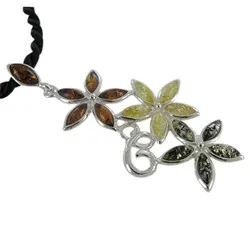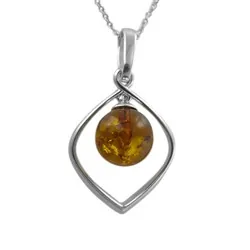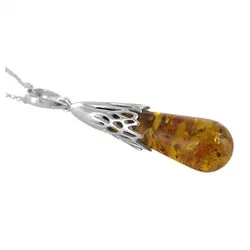
An amber pendant necklace can be the easiest way to start wearing amber, or the piece that makes an old jewelry box feel new again. The pendant gives the stone a clear role at the center of the neckline, while the chain keeps the piece easy to wear with a favorite shirt, knit or dress. It is a simple format, but the choices inside it are wonderfully personal.
The best choice is not the pendant someone else calls rarest, brightest or most important. It is the one whose color, shape and scale fit the way you actually get dressed. A small honey cabochon can become an everyday signature. A larger freeform stone or detailed silver setting can carry a whole outfit. Both are good answers when the piece feels right on you.
This guide makes the decision more concrete. Start with how you want to wear the necklace, then look closely at the amber, the setting, the chain and the information around the exact piece. The aim is not to turn a lovely purchase into homework. It is to make room for the enjoyable part: noticing the pendant that keeps calling you back.
Begin with the role the pendant will play
Before comparing colors, decide what you want the necklace to do in your wardrobe. An everyday pendant should feel comfortable enough to put on without planning an entire outfit around it. A modest stone, a clean silver bezel and a chain length you already enjoy are often a strong starting point. This is the kind of piece that can sit with a T-shirt, a button-down or a simple dress and still feel like itself.
A statement pendant asks for more room. It may have a broader stone, an unusual silhouette, a locket or silverwork that is as noticeable as the amber. It does not need to be reserved for an occasion, but it should be chosen with a little more intention. Think about the necklines you wear most, whether you like to layer necklaces and whether you want the pendant to sit close to the collarbone or lower on the chest.
A gift calls for a slightly different approach. A pendant is often easier to give than a ring or bracelet because it does not depend on a precise size. Look at the recipient's existing jewelry if you can. Someone who wears small silver studs every day may love a calm oval amber pendant. Someone drawn to prints, color or artisan details may enjoy a more sculptural or multi-color piece.
The collection of amber necklaces and pendants is a useful place to compare these directions side by side. Try not to ask which style is universally best. Ask which one would be easy and exciting to reach for next week.

Let the amber color set the mood
Amber does not arrive in one expected shade, which is part of its charm. Honey amber often feels sunny and familiar. It can be clear, softly translucent or full of gentle internal texture. Cognac amber carries more depth and can look rich against black, navy, cream or winter layers. Lemon amber feels bright and light. Cherry amber brings a red-brown note that can make a pendant feel more dramatic without losing warmth.
Color is not a quality ladder. A clear golden pendant is not automatically better than a cloudy or included one, and an opaque stone is not automatically less special. Look for the visual character you enjoy. You might like a smooth, glowing surface, a pale milky interior, a darker edge or a little natural variation that makes the stone feel like a tiny landscape. The right choice is the shade you notice before you have talked yourself into a rule.
Natural variation also makes photographs important. Look at the pendant straight on and at an angle. A close view helps you see whether the color shifts, whether the stone is transparent or opaque and how the amber sits inside the silver. If the item is one of a kind, it is reasonable to expect photographs of the exact piece, not a generic sample that gives only a rough idea.
Color alone cannot confirm a material. National Museums Scotland notes that amber can occur in a wide range of colors and that plastics can be dyed, so a beautiful shade is a reason to look closer, not a test of authenticity. Their guide to identifying imitation amber jewelry also explains why home tests can be damaging or inconclusive. A clear description and useful photographs are a much better beginning for an ordinary jewelry purchase.
For more on the material behind those colors, read What Is Baltic Amber?. It gives a little context without asking you to treat every pendant like a museum specimen.

Choose a size you can picture on yourself
A pendant can look very different in a product photograph than it does at the neckline. Read the dimensions before you fall in love with a silhouette. For a pendant, note the full drop, including the bail, as well as the width. A wide silver frame can give a stone more visual presence, while a long narrow drop may read as more delicate than its length suggests.
Use jewelry you already own as a reference. If a favorite pendant is about an inch long, compare that with the dimensions on the listing. If you usually wear a 16-inch chain, a pendant presented on an 18-inch chain may sit lower than you expect. You do not need a perfect measurement system. You only need enough context to decide whether the piece will feel like an everyday detail or a focal point.
Chain length changes the experience. A shorter chain brings the pendant closer to the face and works especially well with open necklines. A middle length is flexible with many tops. A longer chain can give a larger pendant space to breathe over a knit or high neckline. If you plan to layer, consider the chain lengths already in your jewelry box so the amber pendant will not disappear behind another piece.
Comfort matters just as much as appearance. Amber is often pleasantly light, but the setting and chain still need to feel balanced. Look at the bail, the connection between pendant and chain, and the clasp. A pendant should hang neatly rather than twisting constantly or pulling a delicate chain out of shape. If those details are visible and described, you can imagine wearing the piece much more confidently.

Notice how the setting supports the stone
The setting changes the entire mood of an amber pendant necklace. A simple smooth bezel lets the color lead. A more detailed frame can make a small stone feel like a miniature work of art. Open silverwork may bring light around the amber, while a heavier border can give a pale or opaque stone a stronger outline. None of these choices is a universal sign of quality. They are design decisions that should suit the stone and your style.
Sterling silver is a natural companion for amber because its cool brightness creates a clean contrast with honey, cognac and cherry tones. It can feel modern around a simple oval, romantic around a floral motif or quietly vintage with a soft patina. If you wear silver most days, an amber pendant in sterling silver is usually easy to welcome into the rest of your jewelry. If you mix metals, look at the overall balance rather than following an old rule about matching everything.
Shape gives you another useful cue. An oval or teardrop tends to feel classic and easy to pair. A heart can make the message of a gift more direct. Botanical, animal or celestial motifs give a pendant a story before anyone asks about it. A freeform stone may be the most personal choice of all because it lets the natural outline lead the design. Think about whether you want the pendant to blend with what you already own or offer a little surprise every time you see it.
Look closely at practical craftsmanship, too. The stone should appear secure. The bail should look substantial enough for the pendant's weight. Edges should feel visually finished rather than sharp or unfinished. On a vintage piece, minor signs of age may be part of its appeal, but a listing should name any repair, chip, loose area or condition detail that affects how you will wear it.
A seller's words matter here. Helpful descriptions identify the metal, provide dimensions and explain the exact piece. If a listing relies only on dramatic claims about rarity but leaves out basic details, slow down. A pendant can be meaningful without being mysterious about what it is.
Buy from details, not from a guess
An amber pendant necklace is a small object with many visible details. Good product pages make those details easy to find: the actual material, the metal, the measurements, the images, the condition and the return path. That information does not make the choice less romantic. It lets you enjoy the romance without wondering what will arrive.
Ask whether the photograph shows the exact pendant you will receive, especially for a one-of-a-kind stone or a vintage piece. Ask about treatment if the listing does not explain it. Treatment is not a verdict on whether a piece is worth wearing. What matters is clear disclosure, so you can compare like with like and choose knowingly. For a fuller set of questions, see Where to Buy Amber Jewelry.
Avoid tests that can harm the pendant. A hot needle, solvent, scratch test or harsh cleaner can damage amber and a finished setting. If a question of identity has serious value implications, an independent expert is more useful than a kitchen-table experiment. For a normal purchase, a transparent seller, close photographs and a fair period to inspect the piece are better safeguards.
Once the pendant arrives, look at it gently in daylight before wearing it. Confirm the color, scale, setting and chain are what you expected. Keep the receipt and any care information. Then let the piece become jewelry rather than a problem to solve. The point of choosing carefully is to give yourself permission to enjoy it.
- Is the material described in plain language?
- Do the photographs show the exact pendant from more than one angle?
- Are the pendant dimensions, chain length and metal listed?
- Has any treatment or condition issue been disclosed clearly?
- Is there a return path if the piece is not right in person?
Find a pendant with a point of view
Andzia's Amber Jewelry has been selecting amber pieces since 1996, with an eye for the stone, the silver and the small detail that makes a piece memorable. That approach suits pendants especially well. The appeal is often in a choice that would disappear in a large catalog: a luminous honey stone, a playful nature motif, a soft antique finish or a color combination that feels unexpectedly right.
If you want a pendant with more history, explore the vintage amber pendant collection. If you are looking for a piece to wear now and often, browse Baltic amber jewelry and compare the colors and settings at your own pace. Amber and turquoise remain separate here, so each collection can be appreciated for its own character.
After you choose, keep amber away from perfume, hairspray, harsh cleaners, direct heat and hard knocks. Wipe it with a soft cloth and store it separately from harder jewelry. The full Amber Care guide makes the everyday routine easy. Good care is not fussy. It simply protects the finish, the silver and the personal character that made you choose the pendant in the first place.
The strongest choice is usually the one you can already imagine wearing. Follow the color, shape or little detail that makes you pause. That is often the pendant you will reach for long after the first excitement of finding it.
Frequently asked questions
What is the difference between an amber pendant and an amber necklace?
A pendant is the focal piece that hangs from a chain, while a necklace can also be a complete chain-and-stone design or a strand of amber beads. A pendant gives you a clear way to choose a particular stone, setting and scale.
How do I choose the right amber pendant size?
Start with the full pendant measurements and compare them with jewelry you already wear. A smaller pendant is often easy to layer and wear every day, while a larger stone or detailed setting becomes more of a focal point. Chain length changes where the pendant sits, so check that too.
Does amber color tell me whether a pendant is real?
No. Amber can occur in many colors, and imitation materials can also be colored. Look for a clear material description, useful photographs of the exact piece and a seller who can answer straightforward questions instead of relying on color alone.
Is sterling silver a good setting for an amber pendant necklace?
Sterling silver gives amber a bright, clean contrast and works well with honey, cognac, lemon and cherry tones. The best setting is one that feels balanced with the stone and fits the jewelry you already enjoy wearing.
How should I care for an amber pendant necklace?
Put it on after perfume and hair products have settled, avoid heat, chemicals and hard knocks, then wipe it with a soft cloth after wearing. Store it separately from harder jewelry and avoid abrasive cleaners or home tests that could damage the amber.