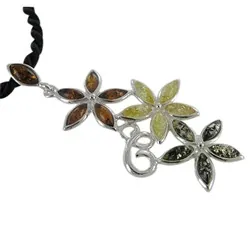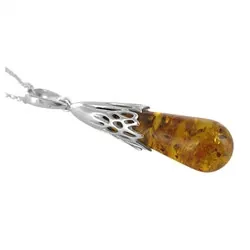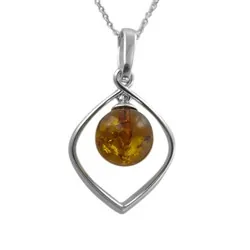
People ask about Baltic amber benefits for a simple reason: the material feels different from an ordinary stone. It is warm in the hand, light to wear, full of color and often visibly individual. Those are real qualities. Baltic amber also carries a long human history, from adornment and trade to scientific study of ancient life. None of that requires an exaggerated promise to be meaningful.
The confusing part begins when beauty, tradition and health are blended into one claim. A necklace can be personally comforting because it is treasured, beautifully made or connected to family history. That does not make it a treatment. A careful answer respects both sides: amber can be a remarkable material for jewelry, while medical claims need evidence that goes beyond a lovely story or a personal testimonial.
This guide explains what Baltic amber genuinely offers to a jewelry lover, what science can and cannot say about popular wellness claims, and how to shop with a clear head. It is not medical advice. If a child or adult has pain or a health concern, a qualified health professional is the right person to ask.
What Baltic amber is, and why people value it
Baltic amber, often called succinite, is fossilized tree resin. The Amber Museum in Gdańsk describes it as the best-known fossil resin, formed from prehistoric trees. That origin is the foundation of its appeal: a polished cabochon can hold clouds, bubbles, plant traces and tones that no factory process can reproduce exactly.
Its benefits as jewelry are tangible. Amber is lightweight, so a generous pendant or a pair of earrings can feel easier to wear than a similarly sized piece of dense stone. Its color range is unusually expressive, from pale lemon and honey through cognac and cherry, with occasional greenish or milky tones. Those variations give a shopper a real choice of mood, scale and style.
Amber also rewards close looking. Transparent pieces catch light differently from opaque pieces, and inclusions can make a stone feel like a small landscape rather than a flat color. The pleasure is not only visual. Choosing a piece with a particular shade, setting or texture can make it feel personal, which is exactly what good jewelry is supposed to do.
For a deeper look at its origin and natural variation, read our What Is Baltic Amber guide. It explains why two genuine stones can look entirely different.

A meaningful object is not the same as a medical treatment
Jewelry can genuinely improve a moment without changing the body. A favorite pendant can mark an anniversary. A color can make an outfit feel finished. A piece inherited from someone loved can offer connection on a difficult day. Those experiences are real, and they do not need laboratory language to be valid.
The line to keep clear is the line between personal meaning and a claim to prevent, treat or relieve a medical problem. The U.S. Federal Trade Commission says health-related advertising claims should be truthful, not misleading and backed by competent, reliable scientific evidence. A story about how someone felt after wearing a bracelet is not the same kind of evidence as a well-designed clinical study.
That distinction protects shoppers. It lets you choose Baltic amber for its warmth, craft and history without paying extra for a promise that has not been shown to hold up. It also protects sellers from turning a beautiful material into something it has never been proven to be.
There is no need to dismiss someone’s experience in order to be careful with it. A person may notice that wearing a meaningful piece helps them feel dressed, connected or more like themselves. That response belongs to the person and the moment. It does not establish that the amber changed a medical symptom, and it should not be used to make a promise to someone else who may need proper care.
If a claim makes amber sound like a substitute for diagnosis, pain relief or professional care, pause. Look for the evidence behind the exact claim, not just a list of ingredients or an appealing tradition. Good information should make the decision clearer, not make you feel rushed or worried.
What about succinic acid?
Baltic amber contains succinic acid, and that fact is often used as the starting point for broad health claims. The fact that a material contains a compound, however, does not show that wearing it on the skin delivers that compound into the body, in an effective amount, or for a useful purpose. Those are separate scientific questions.
A peer-reviewed study of commercial Baltic amber teething necklaces found no evidence that succinic acid from the beads would be released into skin in a way that could provide anti-inflammatory effects for teething. The researchers tested genuine amber products, so this was not a question of whether the beads were real. It was a question of whether the proposed mechanism worked, and the study did not support it.
This is a useful lesson for many products, not just amber. A material can be ancient, natural and chemically interesting without functioning as medicine when worn. The strongest reason to buy amber jewelry is still the honest one: you enjoy the actual piece, its material, its craftsmanship and the way it makes you feel as jewelry.
The same care applies to social-media claims. A dramatic before-and-after, an influencer’s certainty or a long list of ailments can make a weak claim sound convincing. Ask what was tested, in whom, and whether the outcome matches the promise being made.
Amber teething necklaces are not safe for babies
This point deserves to be direct. Amber necklaces, bracelets and other jewelry should not be used to manage teething in infants or young children. A necklace around a child’s neck can create a strangulation risk, and loose beads can create a choking risk. The American Academy of Pediatrics notes that there is no scientific evidence supporting the claimed teething benefit.
The concern is not a judgment on amber itself. It is about a child wearing jewelry and about claims that can delay safer care. The FDA has warned about the safety risks of teething necklaces and bracelets, including amber products. The review of available research has found risks without clinical evidence that amber necklaces relieve teething symptoms.
For a child who seems unwell, is in pain, has a fever or has symptoms that worry you, speak with a pediatric health professional. Jewelry should stay jewelry. Keeping that boundary clear is one of the kindest ways to respect both the material and the people we love.
Our earlier article about amber baby-necklace myths goes into this subject in more detail for caregivers who want a calm, evidence-led explanation.
The benefits of choosing a real, well-described piece
There is another kind of confidence that is worth pursuing: knowing what you are buying. A trustworthy listing should say whether the material is natural amber, pressed amber, copal, glass or a manufactured resin. It should show the actual piece clearly and describe the metal, dimensions and condition in plain language.
That clarity matters because amber is naturally varied. A photograph should show the color, internal character and setting you will receive, not a heavily edited substitute. A seller should be comfortable answering practical questions about origin, treatment and care. None of this has to make shopping feel clinical. It simply makes a personal purchase feel calmer.
A good description also makes comparison easier. Instead of trying to decide whether a stone looks ‘better’ in a tiny image, you can compare shape, dimensions, metalwork and the kind of color you are drawn to. You can decide whether you want a smooth polished finish, a more textured look, a statement pendant or something that will disappear comfortably into an everyday wardrobe.
At Andzia’s Amber Jewelry, pieces are selected for their individual color, inclusions and artisan workmanship. The pleasure is in choosing the stone that speaks to you, whether that means a clear honey pendant, a richly colored pair of earrings or a more organic-looking cabochon. That is a benefit you can actually see and enjoy every time you wear it.
If you are unsure whether a piece is being described honestly, our guide to telling if amber is real offers safer questions to ask than damaging home tests.
How to enjoy amber responsibly
Start with the qualities that are visible and honest. Choose a piece because you love its color, feel, craft or history. Wear it as an adornment, a keepsake or a gift. Give it the same practical care you would give other softer organic gem materials: put it on after perfume and hair products, remove it before swimming or cleaning, and store it separately from harder jewelry.
It is also fine to enjoy the stories around amber, provided stories are presented as stories. Amber has traveled through trade routes, family collections, museums and workshops for centuries. That cultural richness is part of what makes it compelling. It does not need to be marketed as a cure to deserve a place in your jewelry box.
When shopping for a gift, focus on the recipient’s style. A petite pair of studs may suit someone who wears jewelry every day. A pendant can make a thoughtful anniversary or birthday piece. A warm cognac stone may feel classic, while lemon or green tones can be more playful. Browsing real pieces is more useful than searching for a universal benefit, because personal taste is where jewelry becomes memorable.
Explore the Baltic amber collection when you are ready to choose a piece for what it truly offers: natural character, careful craftsmanship and a little everyday glow.
- Choose amber for beauty, history and individual character.
- Treat health claims with the same care you would apply to any medical promise.
- Never use amber jewelry as a teething aid for a child.
- Read material descriptions and ask direct questions before buying.
- Protect a favorite piece with gentle, practical care.
The bottom line
Baltic amber’s real benefits are easy to appreciate. It is lightweight, visually varied, ancient in origin and deeply connected to jewelry-making traditions. It can carry personal meaning, make a gift feel considered and turn an ordinary outfit into something warmer. Those are not small things.
The public record gives a useful standard for health claims. The Federal Trade Commission’s health-products guidance explains that health-related claims need sound, relevant scientific support. Research on amber teething necklaces has not found evidence for the proposed anti-inflammatory effect, and the American Academy of Pediatrics warns against teething necklaces because of the risks to children.
What amber cannot honestly promise is medical treatment. A trustworthy amber purchase leaves room for wonder while staying grounded in what is known. You do not have to choose between respecting tradition and respecting evidence. You can do both by enjoying amber for its real, visible qualities and leaving health decisions to appropriate care.
This approach also makes a gift easier to give. You are not asking a loved one to believe a claim or to wear something for a problem they may have. You are giving them a carefully chosen object, one with a natural story and a character of its own. It can be worn for a birthday dinner, a family gathering or simply an ordinary afternoon when a little color feels right. It may become a familiar piece that quietly gathers its own memories over time. That is generous, personal and enough.
Choose the piece that you would still love if no health claim appeared beside it. That is usually the piece worth keeping, naturally.
Frequently asked questions
What are the real benefits of Baltic amber jewelry?
Baltic amber is valued for its warm color, natural variation, lightweight feel, history and personal meaning. Those are real jewelry benefits. It has not been proven to treat medical conditions when worn.
Does Baltic amber release succinic acid through the skin?
Research on commercial Baltic amber teething necklaces found no evidence that succinic acid would be released into skin in a way that could provide anti-inflammatory effects. A compound being present in a material does not prove a wearable health benefit.
Are amber teething necklaces safe?
No. Health authorities warn that necklaces and bracelets worn by infants can pose strangulation and choking risks, and there is no scientific evidence that amber jewelry relieves teething symptoms.
Can I enjoy amber for spiritual or personal reasons?
Yes. Personal meaning, tradition and beauty are valid reasons to value jewelry. They should be described as personal experiences, not as proof that amber can diagnose, prevent or treat a health condition.
How can I shop for authentic Baltic amber?
Look for a clear material description, detailed photographs of the actual piece, straightforward answers about treatment and origin, and a sensible return path. Avoid damaging home tests and seek professional advice for a costly or collectible claim.